

You might have realised that when you are sick, you barely feel happy. Patanjali Ashtanga Yoga Your mind reacts according to your health. For example, poor gut health often leads to a bad mood. But do you know that the mind affects the body more than the body affects the mind! Yes, it’s true, if your mental state is not healthy, and you are dealing with extreme stress in the modern lifestyle, it will eventually affect your body. SStressin mind gives birth to a lot of ailments like cardiovascular diseases, hypertension, joint problems, migraines, and a lot more.
That is why it is crucial to maintain a healthy mental state to ensure optimal physical health. Patanjali Yoga has many yoga sutras, including one of the most beneficial yogic disciplines, the Ashtanga Yoga. This yoga form helps achieve a healthy mental state, which is ideal for the healthy functioning of the human body. It offers multiple benefits to the people.
So, in this blog, we will understand everything about the Ashtanga Yoga!
The Meaning of Ashtanga
So, the word Patanjali Ashtanga Yoga is related to the Sanskrit language. Here, Asht means 8, and Anga stands for limb. So, together it becomes 8-limbed yoga. In this yoga, there are 8 disciplines that are taught as a key to unlock the real yogic wisdom. Ashtanga yoga is a journey that can help you achieve the ultimate state of yoga, also known as Samadhi. The Yoga Sutras of Patanjali state the definition of Patanjali Ashtanga Yoga. Now, what is Patanjali? Patanjali is an ancient text that has the theory and practice of yoga.
It is said to have been compiled by the profound sage Patanjali around 200 CE. There are a total of 196 sutras in Patanjali. These sutras are short philosophical verses based on the practice of yoga. Patanjali Ashtanga Yoga is divided into 4 books, also known as Padas. These yoga sutras are decoded with the help of Yogbhasa.
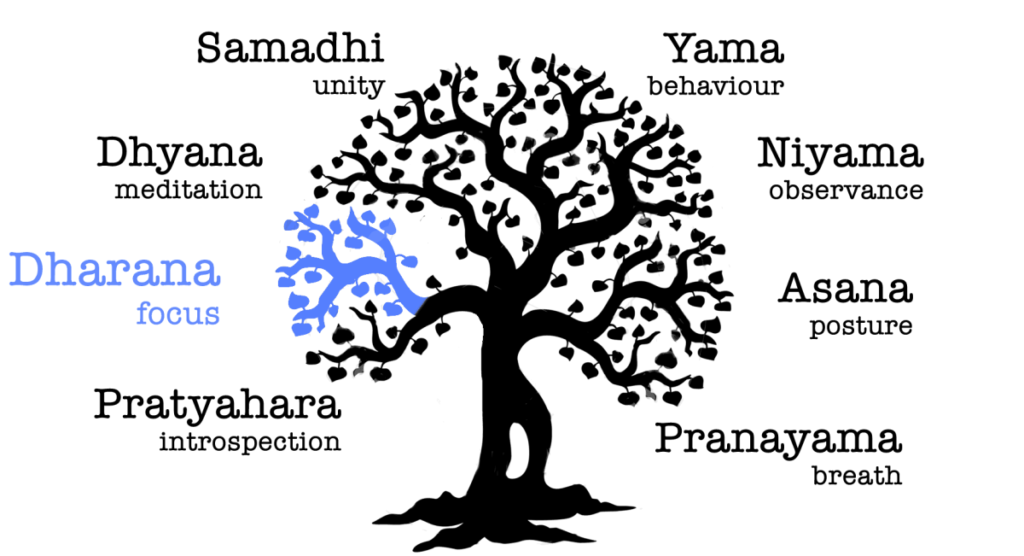
There are 8 limbs in Patanjali Ashtanga Yoga. These limbs are Yama, Niyama, Asana, Pranayama, Pratyahara, Dharana, Dhyana and Samadhi. These are the processes that help in the discovery, the deeper discovery of self, and it helps to explore the divinity within us. After performing the 7 limbs of this yoga, we enter into the state which is known as Samadhi. It is perfect oneness and pure bliss.
What is Patanjali’s Ashtanga Yoga?
As mentioned above, Patanjali Ashtanga Yoga includes 8 limbed paths to achieve the ultimate goal of Samadhi. Patanjali Ashtanga Yoga is known as the Classical System of Yoga. It is described in the Yoga Sutras of Patanjali. The purpose of the Ashtanga Yoga of Patanjali is to master the mind, which is also written as “Chitta Vritti Nirodha”. The meaning of this phrase is that one needs to calm the fluctuation of disturbing thoughts, emotions, and reactions to attain great mental wellness and peace.
As per Patanjali Ashtanga Yoga, most of the sufferings in human life arise out of an imbalanced mental state. Here, imbalance doesn’t mean any disease, but the stress, the anxiety, the fear that arises out of the daily activity. Patanjali Ashtanga Yoga helps one improve the mental state by providing a practical and spiritual framework to overcome mental disturbance and achieve mental clarity and inner peace. When the mind is at peace, your body is also healthy.
This Yoga is known to create a perfect balance between the outer life and the life that is within you. It is said that when you start responding instead of reacting to the sufferings, then the adversities reduce naturally, and you start gaining command over them. You become more compassionate, perfection becomes your power, and you are at peace no matter what is happening around you. Therefore, Patanjali Ashtanga Yoga is a method of self-realisation and self-transformation. Instead of the enemy, here your mind becomes your friend and helps you to overcome any imaginary or physical obstacle in your life peacefully.
The 8 Limbs of Patanjali Yoga
Let’s discuss the 8 limbs of Yoga here:
1. Yama:
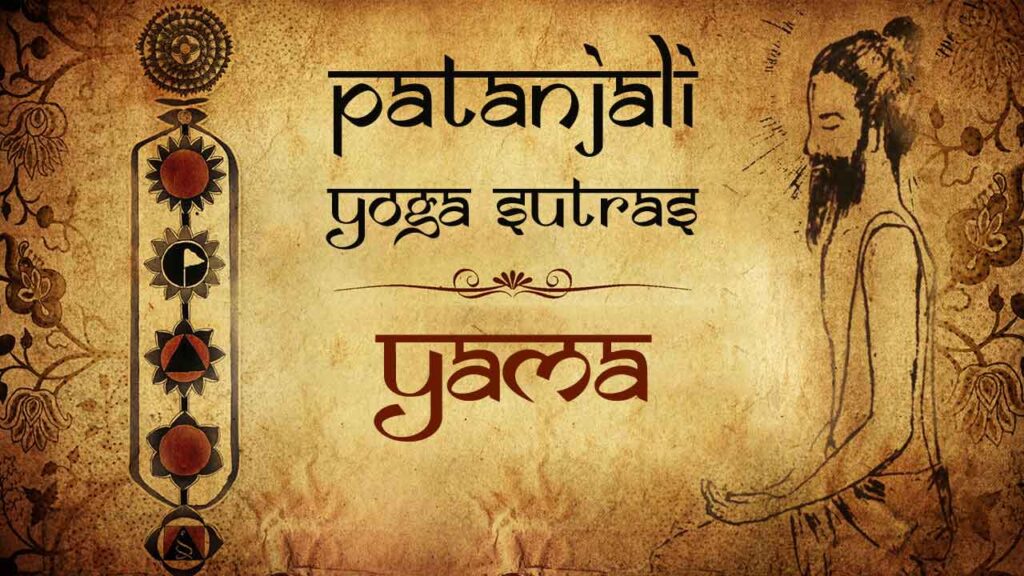
Yama is a discipline that every Yogi should follow in dealing and relating to his or her community. The different types of Yamas mentioned in Patanjali are: Ahimsa, Satya, Asteya, Brahmacharya, and Aparigraha. Ahimsa means non-violence. Satya here stands for truthfulness. Asthya means non-stealing. Brahmacharya means conservation of the important life energy in the body. Aparigraha means non-hoarding.
2. Niyama:
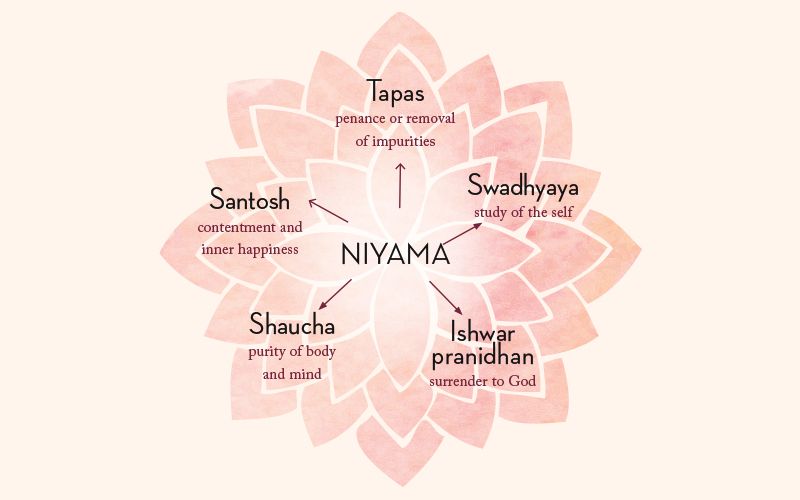
There are some instructions that a Yogi must follow to have a suitable mind, body, and soul for leading a yogic life. The different Niyamas are Saucha, i.e. the body and mind should be clean. Santosh, i.e. the body and mind should be contended. Tapas, i.e. every Yogi should follow a proper discipline in his or her daily life. Swadhyaya, i.e. self-study or self-exploration. Ishvara Pranidhana, i.e. a Yogi should surrender fully to the higher self and accept all levels of transformations.
3. Asanas:
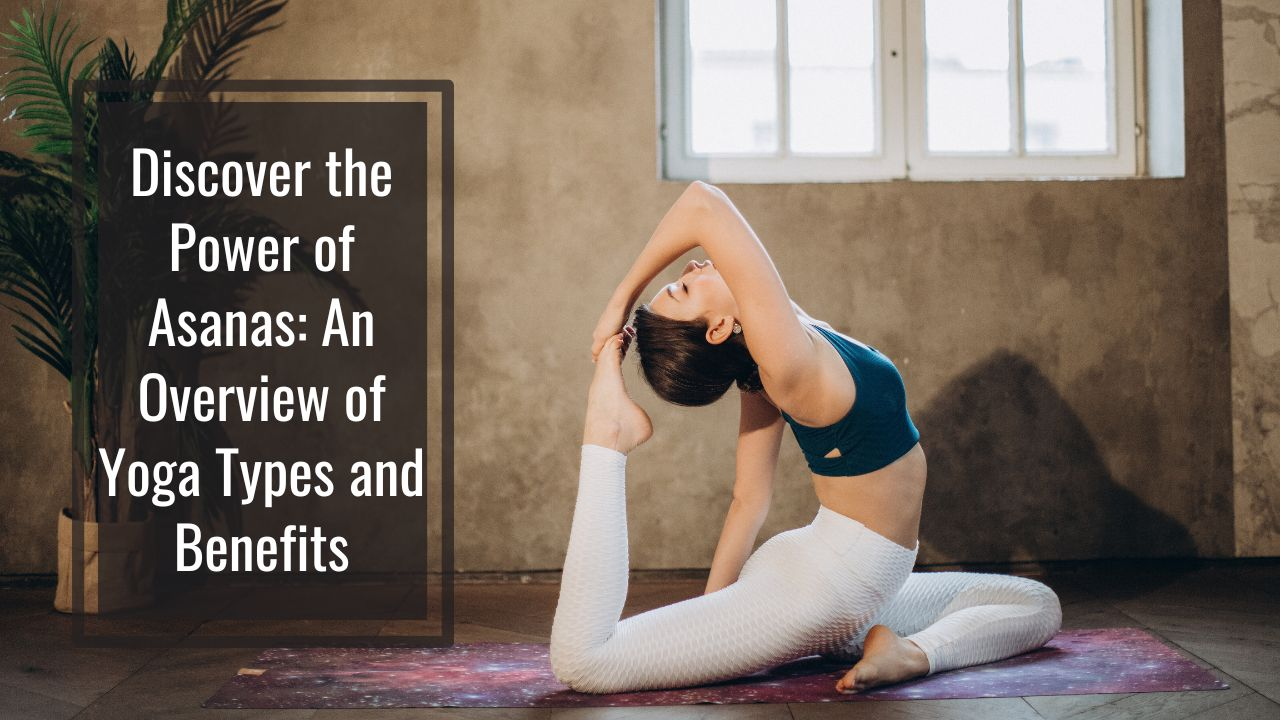
It is the most important part of yoga. This word means seat. These are various meditative postures or yoga physical postures that one should follow to achieve a perfect meditative and yogic state.
4. Pranayama:
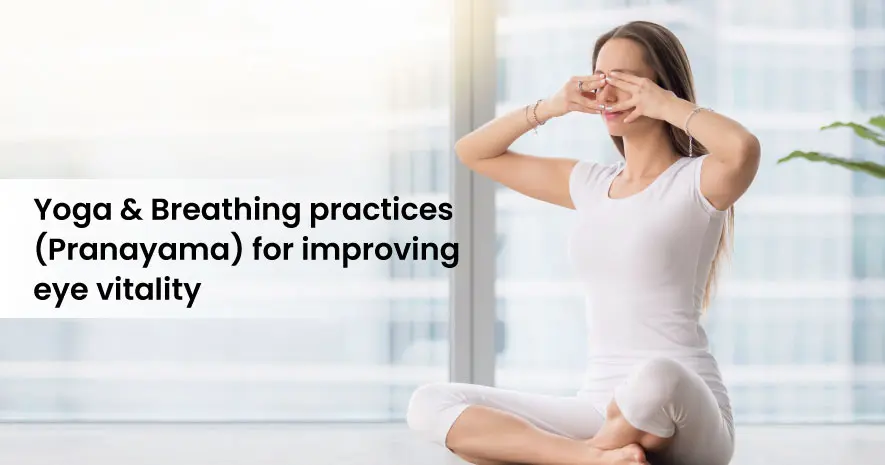
Prana is known to be the life energy flowing inside our body that keeps us alive and healthy. Pranayama means extending the life force. It is a breath work that helps in energising us and keeping us healthy.
5. Pratyahara:
Pratyahara means the art of withdrawing the senses from the things that are non-conducive to the yogic practice. It is a door through which you can enter from the external to the internal world. It is said that when the five senses are in the human’s control, then the mind becomes still, calm and wise.

6. Dharana:
It is an art of concentrating on a single thing, ideally something very sacred or spiritual in nature, without being disturbed by outside disturbances.
7. Dhyana:
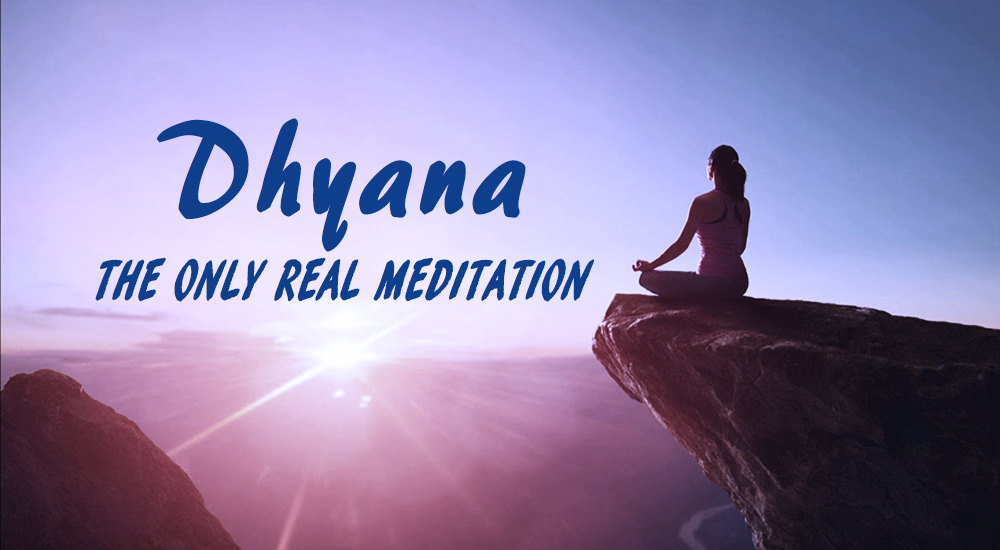
Dhyana means meditation, sitting without being interrupted by any of the bothering thought or external forces. It ensures better concentration and focus that is required in a perfect yogic journey.
8. Samadhi:
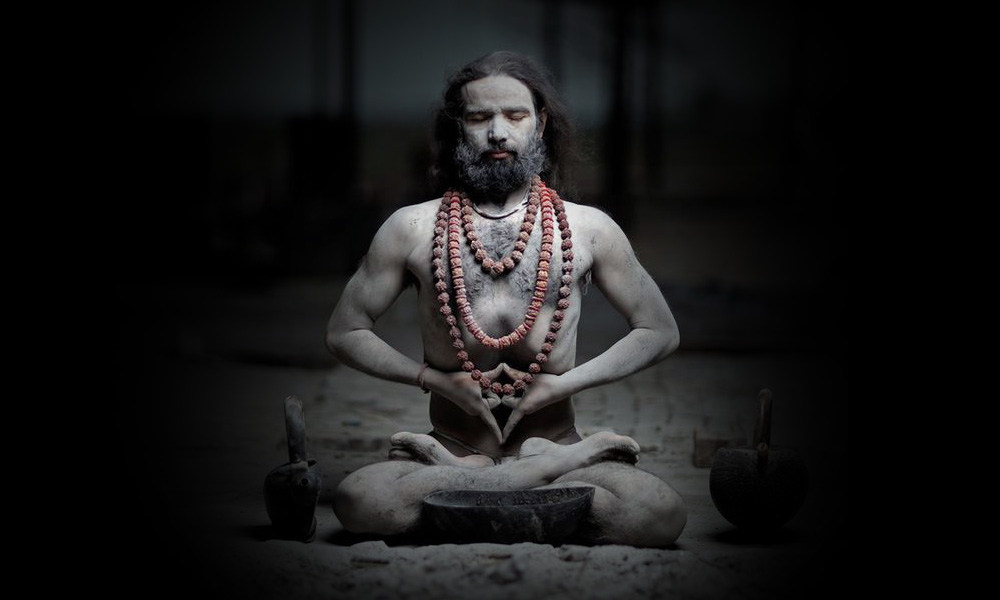
This is the last state for which the above seven limbs are very important. This is the utmost goal of every yogi to attain a super-consciousness trance known as Samadhi. It is the highest state that a yogi attains after following the Ashtanga Yoga disciplines.
Benefits of Following the 8-Limbed Path
The different benefits of Ashtanga Yoga are as follows:
1. It helps in improving core endurance. It relieves lower back pain, especially in athletes. It also helps in increasing body flexibility when practised daily. The various postures in Patanjali Ashtanga Yoga are known to make the hamstrings, legs, spine, and other body parts very flexible and easily movable.
2. It helps in reducing unwanted weight gain. It works on the body fat and flushes it out naturally. It offers practitioners a naturally toned physique, which is really healthy.
3. It helps in building inner strength by activating the use of various Bandhas (locks) present in the body. It helps in harnessing the good flow of prana, i.e. the life energy within us. It focuses on the pelvis, belly, bandhas, throat bandhas, and more to ensure great strength and stability within.
4. It helps in attaining great mental health by relieving stress. The various pranayamas included in Patanjali Ashtanga Yoga help in relaxing the mind and rejuvenating it.
5. Breathing Techniques are another benefit of Patanjali Ashtanga Yoga! We are living in a stressful life that is eventually affecting our physical health as well. Therefore, Ashtanga Yoga includes various types of breathing exercises like Ujjayi Pranayama that help in fueling the fires of metabolism. It helps in improving the flow of prana and rejuvenates the whole system within us.
6. It helps in treating problems like hypertension by lowering high blood pressure. It also tones the abdominal muscles, and it also helps in ensuring a healthy musculoskeletal system, which helps in reducing various types of back pains and body pains.
7. It activates the natural immune system that protects us from various infections and modern-day ailments. It offers an overall well-being by controlling the mind and making it peaceful. When the mind is peaceful, the body itself becomes healthy.
Read More: Atha Yoga Anushasanam
Which of these forms is more beneficial for beginners?
The Ashtang Yoga Form of Patanjali is highly beneficial for beginners as it offers a great start to any yogic journey by blessing it with:
1.Gentle physical practices
2. Awareness of Breath
3. Yogic discipline
4. Mental peace and focus
5. Better concentration
6. Self-observation
7. Patience
In short, a business can attain all the required powers to lead a yogic life by mastering Ashtanga Yoga!
Conclusion
Patanjali Ashtanga Yoga has been practised for decades to attain great mental health, as it explains that mental health highly impacts physical health. The idea of Patanjali Ashtanga Yoga is to correct the root cause of any physical ailments, which is ultimately the mental stress, anxiety, and weakness.
Read More: Yoga Poses for PCOS
Patanjali Ashtanga Yoga is progressive; it is not rigid, therefore, one should not jump or hurry to attain mastery. One should go slowly, enjoy every step in this journey, and learn right, instead of learning fast. It is always advisable to practice various forms of yoga only under the guidance of an experienced yoga guru or acharya. Learning yoga from a certified yoga institution can help you gain the right kind of yogic knowledge and wisdom.